
If your house feels sticky at a temperature that should be comfortable, the problem is probably humidity, not heat. A whole-home dehumidifier fixes it for every room at once.
Your air conditioner removes moisture, but only while it is running a long cycle. That leaves gaps. In spring and fall, the air outside is humid but mild, so the AC barely runs and moisture builds up inside. A system that is too large for the house cools quickly and shuts off before it has pulled much water out of the air. Basements and crawlspaces add moisture of their own.
The result is the familiar Tennessee Valley feeling: the thermostat says 74 and the house feels damp. Most people respond by turning the thermostat down, which costs more and still leaves the air clammy. The EPA recommends keeping indoor humidity below 60 percent, and ideally between 30 and 50 percent, to discourage mold growth.
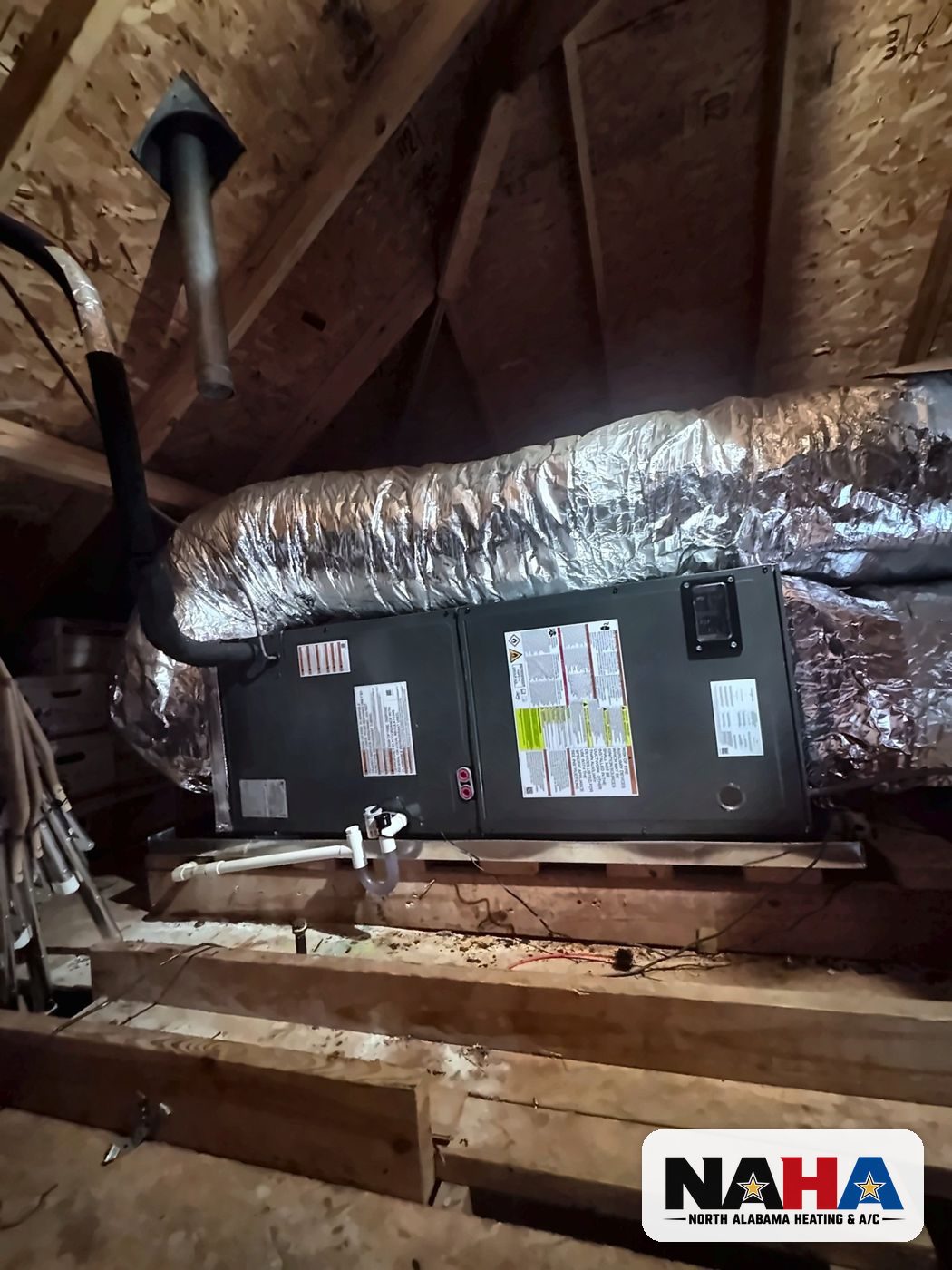
If two or three of these sound familiar, it is worth a look.
The house feels damp or sticky even when it is cool enough.
A stale or musty odor, especially in closets, basements or after rain.
Sweating windows, damp spots near vents, or water on cold surfaces.
Dark spots on ceilings, bathroom walls or around supply registers.
You keep lowering the temperature to feel comfortable.
Moisture below the house works its way up into living space.
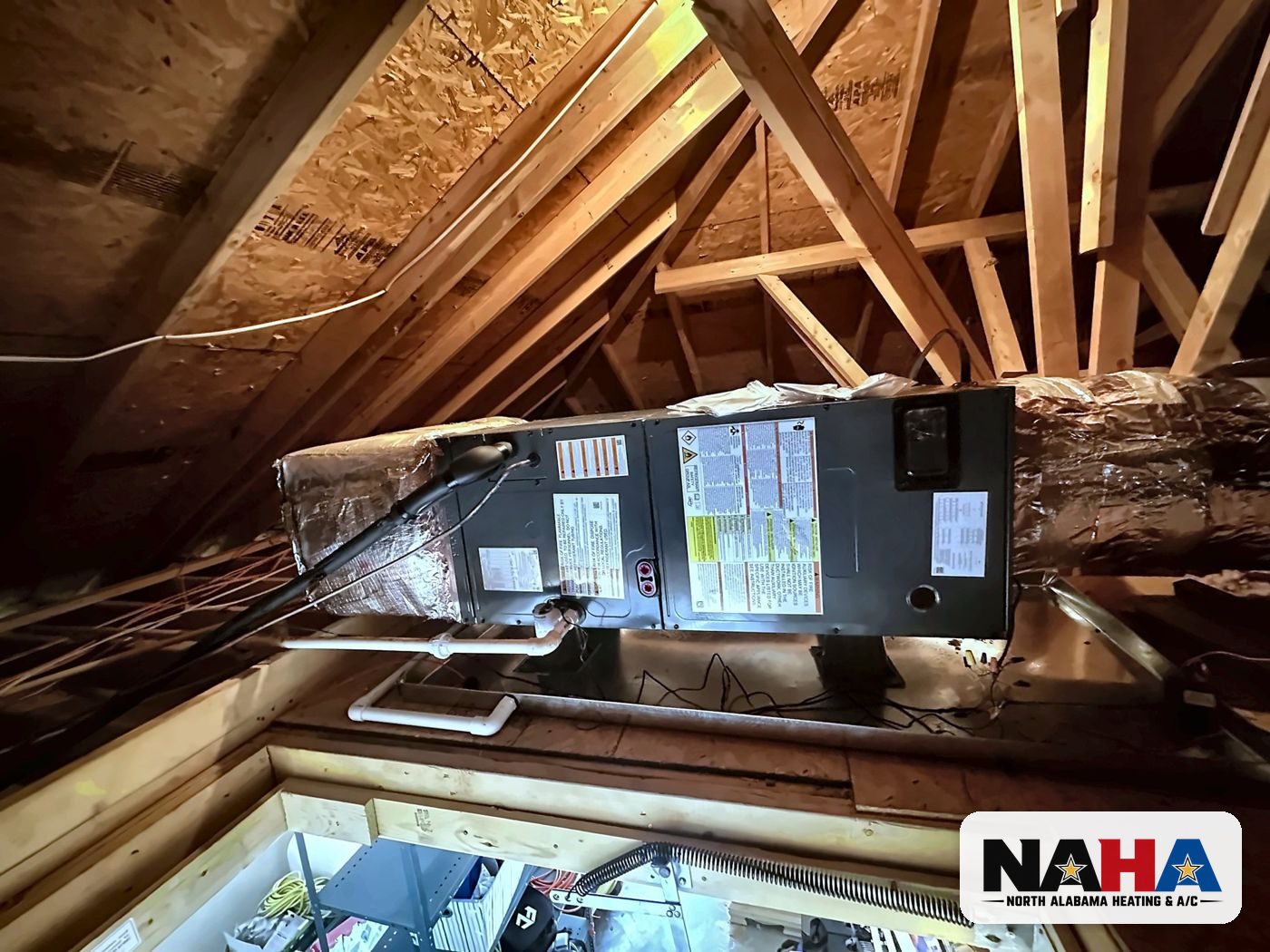
It works with your HVAC system, not as a separate appliance in the corner.
An honest comparison, plus the step most people skip.
Works for one room. You empty the bucket or run a hose, put up with the noise, and it only reaches the space it sits in.
Treats the whole house through your ducts, drains itself, and runs quietly out of sight.
Leaky ducts, an oversized AC or a wet crawlspace can cause high humidity. We check for those before recommending equipment.
We find out why your house is humid before we sell you anything. Sometimes the fix is a dehumidifier. Sometimes it is ductwork or a system that was sized wrong, and we will tell you that.
It does, but only while it runs. In mild, humid weather, or with an oversized system, it does not run long enough to dry the air.
It uses electricity, but drier air feels cooler, so many homeowners can set the thermostat a little higher and stay comfortable.
Usually next to your indoor HVAC equipment in the attic, a closet, crawlspace or basement, connected to the ductwork.
A filter change and a check of the drain line. We can look at it during your regular maintenance visit.